

verified: true
TL;DR
- Bitcoin mining's sustainable energy mix has reached approximately 56-60%, according to the Bitcoin Mining Council, making it one of the most renewable-intensive industries globally.
- Annual energy consumption stands at roughly 150 TWh, comparable to a mid-sized country but representing just 0.09% of global energy production.
- ESG concerns remain a barrier for some institutional allocators, though the narrative is shifting as miners increasingly utilize stranded, flared, and renewable energy sources.
Related Insight: China A-Shares: The Contrarian Opportunity in 2026
Quantifying Bitcoin's Energy Footprint
Bitcoin's proof-of-work consensus mechanism requires miners to expend computational energy to validate transactions and secure the network. This energy expenditure, by design, is what makes the Bitcoin network resistant to attacks and censorship. It is also the source of the industry's most persistent criticism.
The Cambridge Centre for Alternative Finance (CCAF) estimates Bitcoin's annualized electricity consumption at approximately 150 TWh as of mid-2026. This figure fluctuates with Bitcoin's price (which affects mining profitability and therefore the number of active miners) and mining hardware efficiency improvements.
For context, 150 TWh represents roughly 0.09% of total global electricity consumption, which the International Energy Agency (IEA) estimates at approximately 170,000 TWh annually. Bitcoin's energy use is comparable to that of Argentina or Norway and is approximately half the energy consumed by global data centers (estimated at 300-350 TWh).
The comparison to data centers is instructive. Few critics suggest shutting down YouTube or Netflix to save energy, yet these services collectively consume more electricity than Bitcoin. The debate around Bitcoin's energy use is less about the absolute quantity and more about whether the output, a decentralized, censorship-resistant monetary network, justifies the input.
The Renewable Energy Mix
The composition of Bitcoin mining's energy sources has improved significantly since 2021, when China's mining ban pushed a large share of hashrate from hydro-powered Chinese provinces to gas-powered facilities in Texas and Kazakhstan.
The Bitcoin Mining Council (BMC), a voluntary industry group whose members represent approximately 48% of global hashrate, reported a sustainable energy mix of 59.9% in its Q4 2025 survey. Daniel Batten's independent BEEST (Bitcoin Energy and Emissions Sustainability Tracker) analysis estimates the global sustainable energy mix at approximately 56%, using a broader dataset that includes non-BMC miners.
Hydroelectric power is the single largest renewable source for Bitcoin mining, concentrated in regions with abundant and low-cost hydro capacity: Quebec, British Columbia, Scandinavia, and parts of South America. Several major miners, including Iris Energy and Bitfarms, operate facilities powered almost entirely by hydroelectricity.
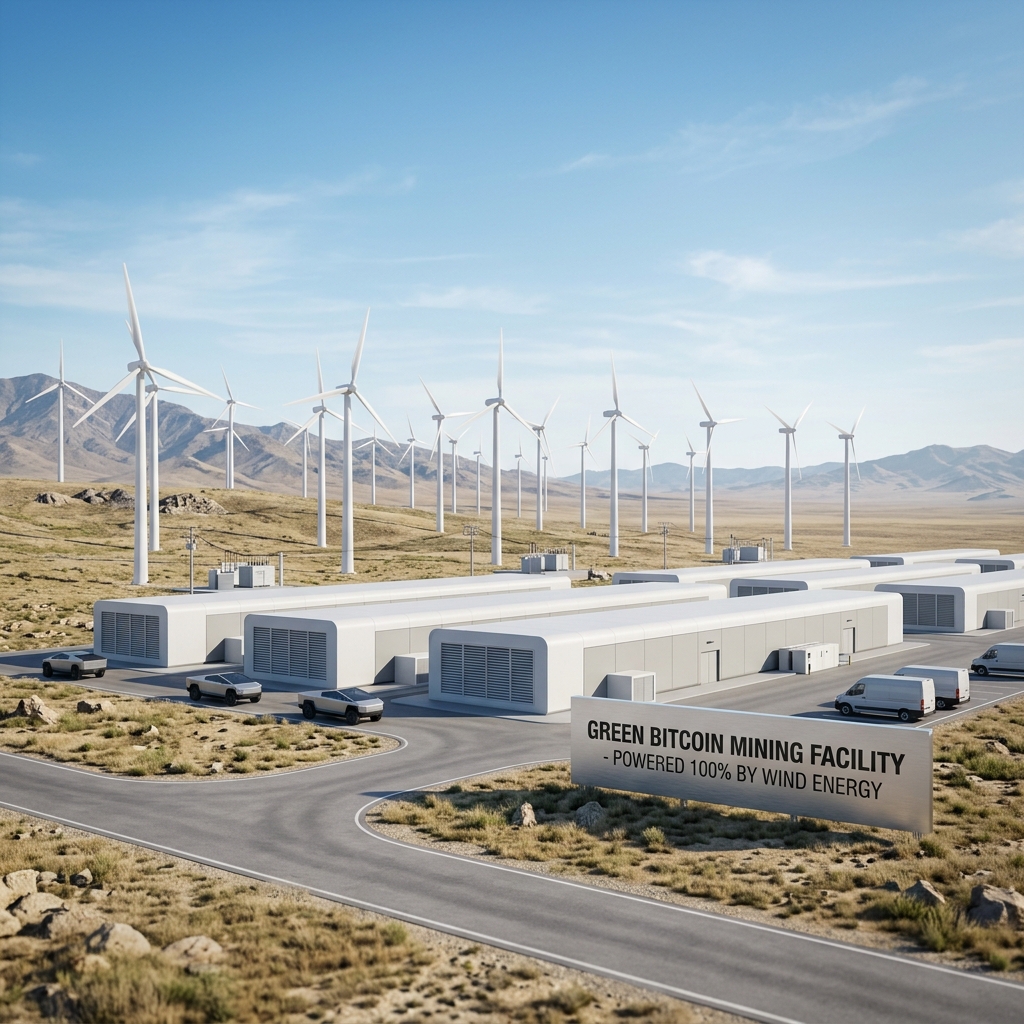
Wind and solar power have grown as energy sources for mining, particularly in Texas, where ERCOT's deregulated grid allows miners to contract directly with renewable energy generators. Miners in Texas also participate in demand response programs, curtailing operations during peak grid demand and earning payments from ERCOT for the load reduction. This grid-balancing function provides economic value beyond Bitcoin production.
Nuclear power is emerging as a growth area. In 2025, TeraWulf became the first major miner to operate a facility co-located with a nuclear power plant (the Nautilus Cryptomine at the Susquehanna nuclear facility in Pennsylvania). Nuclear offers zero-carbon, baseload power ideally suited to Bitcoin mining's 24/7 operational profile.
Stranded and Flared Energy Utilization
One of the strongest sustainability arguments for Bitcoin mining is its ability to monetize energy that would otherwise be wasted. This includes flared natural gas, stranded renewable energy, and curtailed power from overbuilt generation capacity.
Flared gas recovery involves capturing natural gas that oil producers would otherwise burn (flare) at the wellhead. The World Bank estimates that global gas flaring wastes approximately 140 billion cubic meters of natural gas annually, equivalent to the combined gas consumption of Central and South America. Companies like Crusoe Energy and Giga Energy deploy modular mining units at oil well sites, converting flared gas into electricity that powers Bitcoin mining. This approach reduces methane emissions (methane is 80 times more potent than CO2 as a greenhouse gas over 20 years) while generating revenue for the mining operator.
Stranded renewables occur when solar or wind farms generate electricity during periods of low demand, and transmission constraints prevent the power from reaching consumers. In West Texas, for example, wind power is frequently curtailed because the transmission infrastructure cannot handle peak generation. Bitcoin miners absorb this surplus energy at near-zero cost, providing a revenue floor for renewable energy developers and improving the economics of new renewable projects.
The Lancium Clean Campus in Texas exemplifies this model, designing a facility that flexibly consumes renewable energy when abundant and curtails when the grid needs power. This "flexible load" approach positions Bitcoin mining as a complement to renewable energy deployment rather than a competitor.
Comparison to Traditional Finance
Critics of Bitcoin mining's energy use rarely apply the same scrutiny to the traditional financial system's energy footprint. The global banking system's energy consumption is difficult to quantify precisely due to its diffuse nature: bank branches, office towers, data centers, ATM networks, armored transport, printing facilities for currency and documents, and the energy embedded in constructing and maintaining physical infrastructure.
A 2024 analysis by Galaxy Digital estimated that the traditional banking system consumes approximately 260 TWh annually, significantly more than Bitcoin's 150 TWh. This estimate includes commercial bank operations, ATM networks, card payment processing, and central bank operations but excludes the energy embedded in physical currency production and transport.
The gold mining industry, Bitcoin's closest analog as a monetary asset, consumes an estimated 240 TWh annually and generates substantial environmental damage through land disruption, mercury contamination, and water pollution. Bitcoin mining, by contrast, produces no physical waste and can operate on marginal or stranded energy sources.
These comparisons do not settle the debate, as defenders of traditional finance can point to the vastly larger number of people and transactions served. But they do provide context that is often absent from media coverage of Bitcoin's environmental impact.
ESG Frameworks and Institutional Adoption
ESG (Environmental, Social, Governance) considerations remain a factor in institutional Bitcoin allocation decisions, though the narrative has evolved considerably since 2021 when Tesla suspended Bitcoin payments citing environmental concerns.
Several institutional investors have developed nuanced ESG frameworks for evaluating Bitcoin. Norway's sovereign wealth fund (Norges Bank Investment Management) considers the energy source of mining operations when evaluating Bitcoin-related investments. BlackRock's ESG integration framework acknowledges Bitcoin's evolving energy profile in its iShares Bitcoin Trust documentation.
The Bitcoin Mining Council's quarterly sustainability reports have provided a standardized data source for ESG analysts, even though the BMC's methodology has been criticized for potential selection bias (its member base may skew toward more sustainable operators).
Carbon credit markets offer another avenue for addressing ESG concerns. Several Bitcoin miners purchase voluntary carbon offsets or Renewable Energy Certificates (RECs) to achieve carbon-neutral or carbon-negative operational profiles. Marathon Digital, one of the largest publicly traded miners, claims carbon-neutral operations through a combination of renewable energy procurement and offset purchases.
The Hash Rate and Efficiency Trend
Bitcoin's network hashrate, the total computational power securing the network, has continued to rise, reaching approximately 800 EH/s (exahashes per second) in mid-2026, up from 400 EH/s in early 2024. This doubling has not resulted in a proportional increase in energy consumption, thanks to rapid improvements in mining hardware efficiency.
The latest generation of ASIC miners from Bitmain (Antminer S21 XP) and MicroBT (Whatsminer M60S) achieve efficiencies of approximately 13-15 joules per terahash (J/TH), compared to 30+ J/TH for machines produced in 2021. This means the network can process twice the hashrate with roughly similar total energy consumption, as older, less efficient machines are retired and replaced.
The post-halving economics have accelerated this hardware upgrade cycle. With block rewards cut to 3.125 BTC, miners operating older, less efficient equipment face razor-thin or negative margins. Only operators with access to cheap power and modern hardware remain profitable, naturally selecting for a more energy-efficient mining fleet.
Capitalizing on the Data Economy
While this specific trend plays out, adjacent sectors are already feeling the ripple effects. Discover how these dynamics intersect in Bitcoin ETFs: Performance Review and Market Impact.
The ESG narrative around Bitcoin mining is no longer the existential risk it appeared to be in 2021. The industry's renewable energy adoption, stranded energy utilization, and hardware efficiency improvements have substantially weakened the argument that Bitcoin is environmentally destructive.
For institutional allocators with ESG mandates, the key question is no longer "Is Bitcoin mining bad for the environment?" but rather "Which Bitcoin exposure vehicles align with our ESG criteria?" ETFs that source Bitcoin from verified green miners, or mining equities with documented renewable energy profiles, offer pathways for ESG-conscious investors.
The remaining risk is political. Proposed legislation in some jurisdictions (notably the EU's early debates and certain US states) has targeted proof-of-work mining with restrictive energy regulations. While none has been enacted at a national level in major markets, the regulatory threat persists and could resurface during energy crises or political shifts.
How much energy does Bitcoin mining use?
Bitcoin mining consumes roughly 150 TWh annually according to the Cambridge Centre for Alternative Finance, about 0.09% of global electricity and comparable to a country like Argentina or Norway.
How much of Bitcoin mining uses renewable energy?
Estimates put the sustainable energy mix at roughly 56% to 60% (the Bitcoin Mining Council reported 59.9% in Q4 2025), driven by hydro, wind, solar, and increasingly nuclear power.
Does Bitcoin use more energy than the banking system?
No. By one Galaxy Digital estimate the traditional banking system uses about 260 TWh a year and gold mining about 240 TWh, both above Bitcoin's roughly 150 TWh.
Is Bitcoin mining still an ESG problem for investors?
The environmental argument has weakened as miners adopt renewables, monetize flared and stranded energy, and improve hardware efficiency; the main residual risk is now political and regulatory rather than energy volume.
verified: true
Disclaimer: This article is for informational purposes only and does not constitute financial advice. Always consult a qualified financial advisor before making investment decisions.